Skip to content

Articles

Insights & publications

May 20th, 2026

Don't Let Your Patent Sink with AI Inventorship

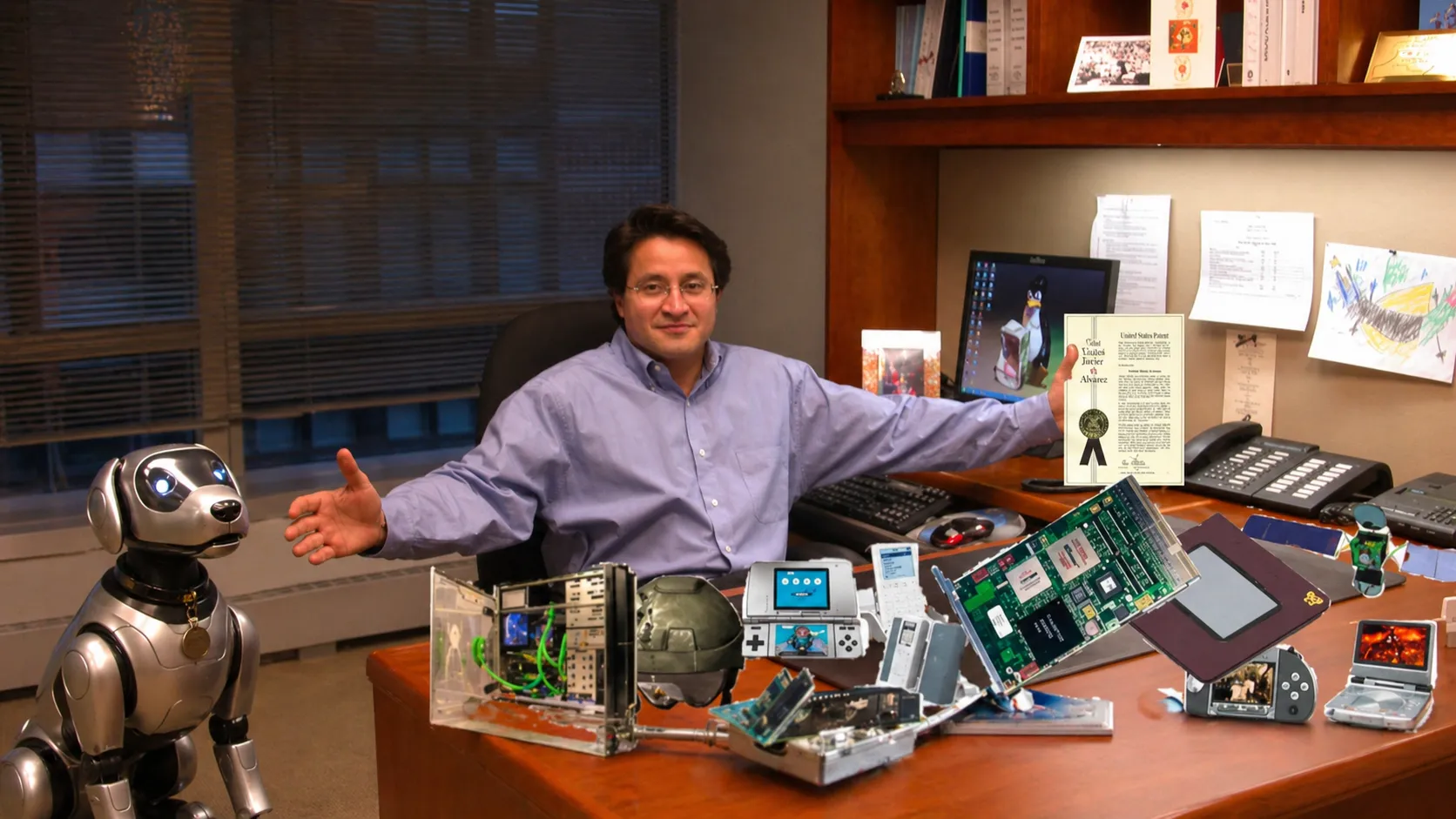
Carlos R. Villamar at his desk surrounded by inventions, patents, and a robot dog

Carlos R. Villamar on AI-assisted inventorship: U.S. patents still require a human inventor — what counts as a meaningful human contribution when AI is in the loop.

Determining and naming proper inventorship in a patent application is an important consideration that should not be overlooked. This issue has become even more important as inventors, companies, engineers, and product teams increasingly use artificial intelligence tools during the innovation process. Improper inventorship can create serious problems down the line, including challenges to ownership, enforceability, and validity.

Under current U.S. patent law, an inventor must be a natural person. In other words, an artificial intelligence system cannot be named as an inventor or co-inventor on a U.S. patent application. However, that does not mean inventions developed with the assistance of AI are unpatentable. The key question remains whether one or more human beings conceived of the claimed invention.

An AI tool that merely generates output based on an inventor's specification is not an inventor.

A practical way to evaluate AI-assisted inventorship is to ask who conceived of the features that are actually claimed.

Assume that an inventor is an avid golfer and conceives of a new and novel golf club head design. The inventor prepares a detailed specification for the golf club head and uses an AI tool to generate drawings, dimensional variations, manufacturing suggestions, or prototype instructions based on the inventor's own specification. In that situation, the AI tool is not an inventor. The AI is functioning like a machinist who fabricates a prototype according to the inventor's instructions.

Similarly, if an inventor conceives of a software architecture and uses an AI coding tool to generate source code implementing that architecture, the AI tool is not an inventor. The AI is merely assisting with implementation.

Now, let's assume the facts change. The inventor asks an AI system to propose ways to improve the golf club head. The AI system outputs a new configuration that includes additional structural features that improve ball flight, and the human user merely copies those features into a patent application without having conceived of them or meaningfully contributing to their development. In that situation, a serious inventorship issue may arise.

This is where AI-assisted inventorship differs from the traditional machinist or software programmer example. A human machinist or software programmer who contributes new and non-obvious subject matter that is later claimed may become a co-inventor. An AI system, however, cannot be named as a co-inventor. Accordingly, the critical question is not whether the AI contributed useful output, but whether one or more human beings made a significant contribution to the conception of the claimed invention.

AI may assist the inventive process, but inventorship still depends on the human contribution to the claimed invention.

The same reasoning applies to software inventions. If a human inventor conceives of the technical solution, defines the system architecture, specifies the data flow, identifies the machine-to-machine interactions, and uses AI merely to generate implementation details, the human inventor remains the inventor. But if an AI system supplies a claimed technical feature and no human can honestly say that he or she conceived of that feature, the patent application may face an inventorship problem.

Using AI does not defeat inventorship, but relying on AI to supply the claimed inventive concept may create an inventorship gap.

Inventorship is determined based on the claims of a patent application. Accordingly, if claims are cancelled, amended, or added, inventorship may have to be reviewed to ensure that the named inventors correspond to the claimed subject matter. This is especially important for AI-assisted inventions because claims may evolve during drafting or prosecution.

Because patent applications often remain pending for several years, determining inventorship after the fact can be difficult. For AI-assisted inventions, keeping careful records is more important than ever. Inventors and companies should document the human contribution, including prompts, AI outputs, human modifications, design decisions, technical reasoning, rejected alternatives, and the final claimed features. A traditional lab notebook, engineering notebook, invention disclosure form, or AI-use log may be helpful for determining proper inventorship down the road.

Keeping records of the human contribution when AI tools are used may be critical for determining proper inventorship later.

Careful inventorship review can help prevent AI-related inventorship issues from undermining an otherwise valuable patent. AI can be a powerful tool for innovation, just like computer-aided design software, simulation tools, laboratory equipment, a machinist, or a software developer. But the patent system still requires a human inventor.

Finally, it is important to find a patent attorney who takes the time to understand your technology, your use of AI tools, your business model, and your development process to ensure that an IP strategy is executed in a focused and efficient manner.

It is also important to find a patent attorney who takes the time to understand the needs of the inventors, start-ups and business partners

*This article is provided by the author with the understanding that it does not constitute the rendering of legal advice or other professional advice by The Villamar Firm PLLC or its attorney.
Aug 21, 2025

Lean Intellectual Property Rights (IPR) Protection: Maximizing IPR Portfolios While Minimizing Costs

Cover slide: Lean IPR Protection — Maximizing IPR Portfolios While Minimizing Costs (RTX, Aug 21, 2025)

Presentation delivered to RTX on August 21, 2025 by Carlos R. Villamar, J.D., M.S.E.E., B.S.E.E.

Read / Download →

*This article is provided by the author with the understanding that it does not constitute the rendering of legal advice or other professional advice by The Villamar Firm PLLC or its attorney.
Aug 5, 2025

Lean Intellectual Property Rights (IPR) Protection: Maximizing IPR Portfolios While Minimizing Costs

Cover slide: Lean IPR Protection — Maximizing IPR Portfolios While Minimizing Costs (Quince Imaging, Aug 5, 2025)

Presentation delivered to Quince Imaging on August 5, 2025 by Carlos R. Villamar, J.D., M.S.E.E., B.S.E.E.

Read / Download →

*This article is provided by the author with the understanding that it does not constitute the rendering of legal advice or other professional advice by The Villamar Firm PLLC or its attorney.
Oct 13, 2020

Lean Intellectual Property Rights (IPR) Protection: Patent Pools & OU812 Open Innovation Engine

Lean IPR Protection: Patent Pools & OU812 Open Innovation Engine — presentation cover

Presentation on patent pools and the OU812 Open Innovation Engine as a lean approach to IPR protection — delivered for Bahrain audience, October 2020.

Read / Download →

*This article is provided by the author with the understanding that it does not constitute the rendering of legal advice or other professional advice by The Villamar Firm PLLC or its attorney.
Sep 25, 2020

Lean Intellectual Property Rights (IPR) Protection: Inventorship & Ownership Best Practices

Lean IPR Protection: Inventorship & Ownership Best Practices — presentation cover

Presentation on US patent system distinguishing features, common pitfalls for startups and universities, and inventorship & ownership best practices — delivered for Bahrain audience, September 2020.

Read / Download →

*This article is provided by the author with the understanding that it does not constitute the rendering of legal advice or other professional advice by The Villamar Firm PLLC or its attorney.
Mar 14, 2019

Lean Intellectual Property Rights (IPR) Protection: Maximizing IPR Portfolios While Minimizing Costs

Cover slide: Lean Intellectual Property Rights (IPR) Protection — Maximizing IPR Portfolios While Minimizing Costs, by Carlos R. Villamar, March 14, 2019

Presentation by Carlos R. Villamar at the Lean IPR Meetup on maximizing intellectual property portfolios while minimizing costs.

Read / Download →

*This article is provided by the author with the understanding that it does not constitute the rendering of legal advice or other professional advice by The Villamar Firm PLLC or its attorney.
Feb 5, 2018

Lean Intellectual Property Rights (IPR) Protection: Maximizing IPR Portfolios While Minimizing Costs

Cover slide: Lean IPR Protection presentation by Carlos R. Villamar

Presentation at Makers Space — overview of the US patent system, common pitfalls for startups and universities, and strategies to maximize IPR portfolios while minimizing costs.

Read / Download →

*This article is provided by the author with the understanding that it does not constitute the rendering of legal advice or other professional advice by The Villamar Firm PLLC or its attorney.
Dec 1, 2015

Lean Intellectual Property Rights (IPR) Protection

First slide of: Lean Intellectual Property Rights (IPR) Protection

Villamar, "Lean Intellectual Property Rights (IPR) Protection: Maximizing IPR Portfolios While Minimizing Costs," presentation for online webinar (December 2015).

Read / Download →

*This article is provided by the author with the understanding that it does not constitute the rendering of legal advice or other professional advice by The Villamar Firm PLLC or its attorney.
Nov 3, 2015

Intellectual Property Rights Protection: The Ever-changing Landscape

First slide of: Intellectual Property Rights Protection: The Ever-changing Landscape

Villamar, presentation for lecture at JAMK University of Applied Sciences (November 2015).

Read / Download →

*This article is provided by the author with the understanding that it does not constitute the rendering of legal advice or other professional advice by The Villamar Firm PLLC or its attorney.
Feb 2, 2015

Intellectual Property Rights Protection & Related Topics

First slide of: Intellectual Property Rights Protection & Related Topics

Villamar, presentation for lecture at University of Oulu (February 2015).

Read / Download →

*This article is provided by the author with the understanding that it does not constitute the rendering of legal advice or other professional advice by The Villamar Firm PLLC or its attorney.
Jan 19, 2015

Avoiding the Third Party Nightmare

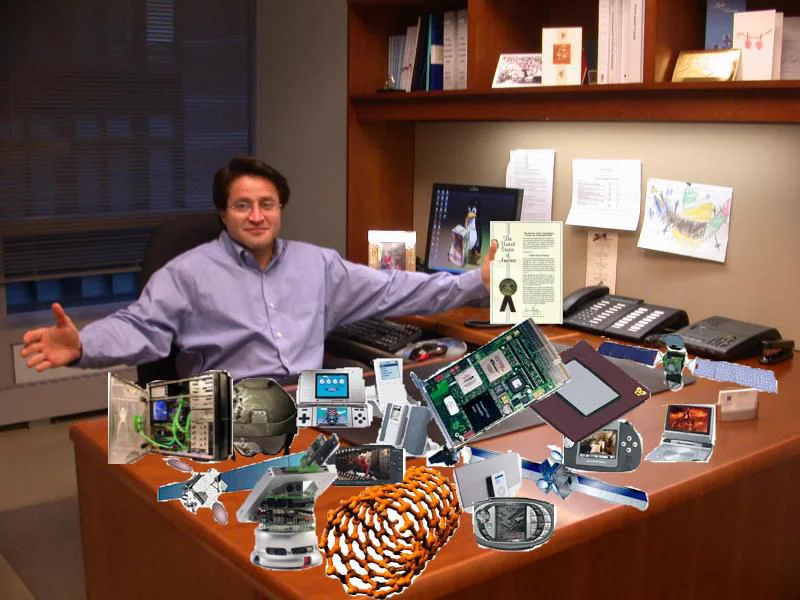
Carlos R. Villamar at his desk surrounded by inventions and patents

Working with a third party is much like a marriage; in order for the relationship to last, you have to get it right from the beginning.

Working with a third party — whether an investor, a joint venture, a business partner, or a hardware or software developer — is much like a marriage: in order for the relationship to last, you have to get it right from the beginning. For example, a start-up company may have a new patentable idea and require a third-party software developer to produce the final product. Similarly, a start-up may seek investment and partner with an angel or venture capitalist to fund the project. If the terms of such third-party arrangements are not clearly spelled out, specifically with respect to IP rights ownership, a disaster is just waiting to happen.

Working with a third party … is much like a marriage

With respect to start-ups working with hardware or software developers, it is important to have a clear agreement as to who owns the IP rights — whether for the original idea, the final product, or any later improvements. Too often, start-ups in their rush to develop their product contract out work to third parties with no provisions regarding IP rights, only to have such third parties file patents to the final product or their improvements. This can quickly become a legal nightmare, and can easily be avoided by ensuring that the terms regarding IP ownership are clearly set out up front. Such agreements should also list any existing IP rights that are owned by the start-up and third-party companies.

agreements should also list any existing IP rights

Similarly, when inventors or start-ups are working with business partners — whether a co-inventor, CEO, or investor — IP rights ownership should be discussed up front. A good practice from the start-up's point of view is to ensure that all IP is assigned to the start-up as soon as possible. After all, relationships can go sour, and start-ups can end up working with hostile inventors who refuse to later assign any IP rights to the start-up or participate in the patenting process. Taking steps to avoid such problems includes requiring employees to sign employment contracts that clearly spell out IP ownership and related duties.

relationships can go sour, and start-ups can end up working with hostile inventors

From the inventor's point of view, it is important to set out in any employment contract IP rights that the inventor brings to the table, prior to employment. Many inventors have had their previous inventions taken by their employer after being hired, under threat of being fired. If the inventors assign their inventions to employers, the inventors should negotiate fair compensation and review any company agreements to ensure that any equity in the form of shares provided as compensation is not diluted or worthless in any way.

From the inventor's point of view, it is important to set out in any employment contract IP rights that the inventor brings to the table

Accordingly, taking steps to ensure that IP rights are properly spelled out is a most important step in any business relationship. A good practice is to treat any such relationship like a marriage, and ensure that you would be willing to get in bed with your partners. It is also important to find a patent attorney who takes the time to understand the needs of the inventors, start-ups, and business partners to ensure that any IP agreements are a win-win for all parties involved. Good teamwork and playing fair get things done right the first time!

It is also important to find a patent attorney who takes the time to understand the needs of the inventors, start-ups and business partners

*This article is provided by the author with the understanding that it does not constitute the rendering of legal advice or other professional advice by The Villamar Firm PLLC or its attorney.
Nov 3, 2014

Intellectual Property Rights Protection & Related Topics

First slide of: Intellectual Property Rights Protection & Related Topics

Villamar, presentation for lecture at JAMK University of Applied Sciences (November 2014).

Read / Download →

*This article is provided by the author with the understanding that it does not constitute the rendering of legal advice or other professional advice by The Villamar Firm PLLC or its attorney.
Nov 4, 2013

Urban Aquaponics

First slide of: Urban Aquaponics

Villamar, presentation for lecture at JAMK University of Applied Sciences (November 2013).

Read / Download →

*This article is provided by the author with the understanding that it does not constitute the rendering of legal advice or other professional advice by The Villamar Firm PLLC or its attorney.
Oct 19, 2012

Patent Office Procedures, Oath & Declaration, User Fees, Prioritized Examination and International Filing Considerations

First slide of: Patent Office Procedures, Oath & Declaration, User Fees, Prioritized Examination and International Filing Considerations

Villamar, presentation for IEEE, "The America Invents Act: How the Legal Implications of the AIA Will Affect Best Business Practices — A Survival Manual" (George Mason University School of Law, October 19, 2012).

Read / Download →

*This article is provided by the author with the understanding that it does not constitute the rendering of legal advice or other professional advice by The Villamar Firm PLLC or its attorney.
May 7, 2012

Legal Issues With Respect To Video Gaming Technologies

First slide of: Legal Issues With Respect To Video Gaming Technologies

Villamar, presentation for Procopé & Hornborg (May 2012).

Read / Download →

*This article is provided by the author with the understanding that it does not constitute the rendering of legal advice or other professional advice by The Villamar Firm PLLC or its attorney.
Feb 6, 2012

Maximizing Worldwide Intellectual Property Rights Protection While Minimizing Costs

First slide of: Maximizing Worldwide Intellectual Property Rights Protection While Minimizing Costs

Villamar, presentation at Procopé & Hornborg (February 2012).

Read / Download →

*This article is provided by the author with the understanding that it does not constitute the rendering of legal advice or other professional advice by The Villamar Firm PLLC or its attorney.
May 2, 2011

Managing Intellectual Property Rights: How to maximize IP and minimize costs

First slide of: Managing Intellectual Property Rights: How to maximize IP and minimize costs

Villamar, presentation at Procopé & Hornborg (May 2011).

Read / Download →

*This article is provided by the author with the understanding that it does not constitute the rendering of legal advice or other professional advice by The Villamar Firm PLLC or its attorney.
Mar 1, 2011

The America Invents Act

Carlos R. Villamar at his desk surrounded by inventions and patents

Overview of S. 23 and its major reforms to US patent law.

The United States Senate passed Senate Bill S. 23 entitled "The America Invents Act" on March 8, 2011. This bill must still be passed by the House of Representatives and signed into law by the President. The bill includes a number of provisions, the more notable of which include:

Conversion to A First to File System: (a) gets rid if the current patent eligibility based on "first to invent" and would harmonize US patent law with the rest of the world; (b) provides a one year grace period for inventor's own disclosures prior to filing of a patent application.

Gets rid of the current patent eligibility based on "first to invent" and would harmonize US patent law with the rest of the world.

Post-Grant Review Proceedings: (a) adds a substantially broader post grant review process as compared to the current reexamination proceedings, which are limited to consideration of prior patents or printed publications.

A substantially broader post-grant review process compared to the current reexamination proceedings, which are limited to prior patents or printed publications.

Pre-Issuance Submissions By Third Parties: (a) expands the current US Patent and Trademark Office third party prior submission procedure, which is limited to submitting prior art with relevant explanations within two months of the date of first publishing of a US patent application; (b) extends the submission window to before the earlier of six months after the date of first publishing of an application or the date of a first rejection of any claim during the examination of an application.

Fee Setting Authority: (a) removes the current practice of Congress diverting fees collected by the PTO for Government operations.

Supplemental Examination: (a) allows a patent owner to request supplemental examination of a patent to consider, reconsider or correct information believed to be relevant to the patent.

Best Mode Requirement: (a) will remain a condition for patentability under 35 U.S.C. §112, but will not be a basis from which any claims for patenting can be canceled, held invalid or otherwise held to be unenforceable.

Best mode will remain a condition for patentability under 35 U.S.C. §112, but will not be a basis from which any claims can be canceled, held invalid, or otherwise held to be unenforceable.

Transitional Program for Covered Business-Method Patents: (a) will provide for the implementation of a transitional post-grant review of the validity of covered business-method patents, wherein a person cannot file a petition for such transitional proceeding unless the real party in interest has been sued for patent infringement or has been charged with patent infringement, and with such transitional procedure to be repealed effective 4 years from the date that the PTO issues regulations relating to this section.

Priority Examination for Technologies Important to American Competitiveness: (a) will provide for high examination priority for applications related to products, processes or technology that are important to the national economy or national competitiveness, and without recovery of such prioritization costs.

False Marking: (a) will change the current law allowing anyone to sue for false marking to limiting such parties to the U.S. government or a person who has suffered competitive injury.

False marking suits will be limited to the U.S. government or a person who has suffered competitive injury.

Derivation proceedings: (a) will allow an applicant to file a petition to institute a derivation proceeding to allow for cancellation of any claim that (i) an inventor named in an earlier application derived from the inventor named in the petitioner's application, and (ii) was filed without authorization, wherein such petition must be filed within one year after the first publication of a claim to an invention that is the same or substantially the same as the earlier application's claim.

A factor to consider with respect to patent lawyers is the expertise that the patent attorney provides. It is important to find a patent attorney that understands current developments in the patent laws and with respect to a company's technology, revenue model, and work processes, to make sure that an IP strategy is executed in a focused and efficient manner.

It is important to find a patent attorney that understands current developments in the patent laws and with respect to a company's technology, revenue model, and work processes

*This article is provided by the author with the understanding that it does not constitute the rendering of legal advice or other professional advice by The Villamar Firm PLLC or its attorney.
Dec 1, 2010

Technology, Technology, Technology – The Recent Impacts of In re Bilski

Carlos R. Villamar at his desk surrounded by inventions and patents

As if it weren’t already hard enough to get patents for business methods and lower tech inventions, the recent In re Bilski decisions have added another hurdle to the process. The U.S. Federal Circuit decided that a process or method invention that does not have a technological aspect cannot even be the subject of a patent application. The invention in question was directed to a process for managing the consumption of risk costs of a commodity, and did not recite any computer or technological implementations. More recently, the U.S. Supreme Court agreed and confirmed that mere abstract ideas are not patentable. The U.S. requirements are not much different than the “technical effect” requirement in most European countries for patent eligibility.

The U.S. requirements are not much different than the “technical effect” requirement in most European countries for patent eligibility

So what to do for inventions that are not technology based or even perhaps that are performed only with a general purpose computer? One solution might be to think about the invention in terms of broader system implementations or more specific applications. For example, an invention that requires psychologists to physically visit and observe patients for forming medical evaluations at first blush may seem to be dead in the water. However, implementing such a procedure remotely, for example, as a client-server system over the Internet and employing facial recognition algorithms, etc., to observe and evaluate the patients may employ enough technology and be sufficiently concrete to save the day. Nonetheless, in this apparently patent-hostile environment, a novelty search is well advised to increase the chances of determining if patent protection is available and to flesh out options for strengthening patentability.

a novelty search is well advised to increase the chances of determining if patent protection is available and to flesh out options for strengthening patentability

A recent U.S. Federal Circuit decision involving a dispute between Microsoft and Research Corporation Technologies (RCT) does provide some light at the end of the tunnel as far as patent eligibility is concerned. In this case, the U.S. Federal Circuit upheld an RCT patent directed to a method for half-toning gray scale images, finding that not all uses of computer based mathematical algorithms result in unpatentable subject matter and that the subject matter should be analyzed with respect to the patent as a whole, as compared to claim definiteness challenges which are analyzed on a claim by claim basis.

subject matter should be analyzed with respect to the patent as a whole, as compared to claim definiteness challenges which are analyzed on a claim by claim basis

Higher tech inventions appear to be safe for now. This is because these types of inventions typically involve technological improvements over the prior art. They are thus easier to patent and should not be affected by Bilski and other decisions. With the recent economic downturn, however, even high tech companies must be smart about how they spend their patent dollars and should work with a competent patent attorney who can understand their business and technology, who can help them navigate the IP landscape, and who can help them protect their IP assets nationally and globally.

even high tech companies must be smart about how they spend their patent dollars

A factor to consider in this respect is the cost-effectiveness the patent attorney provides. After all, it is no secret that the most expensive piece of the IP protection puzzle is usually the patent attorney. Therefore, it is important, particularly for high tech companies, to find a patent attorney that takes the time to understand the company’s technology, revenue model, and work processes to make sure that an IP strategy is executed in a focused and efficient manner.

find a patent attorney who takes the time to understand the company’s technology … to ensure that an IP strategy is executed in a focused and efficient manner

*This article is provided by the author with the understanding that it does not constitute the rendering of legal advice or other professional advice by The Villamar Firm PLLC or its attorney.
Dec 1, 2010

Villamar, "Introduction to Intellectual Property Rights (IPR): US and Global Perspectives"

First slide of: Villamar, "Introduction to Intellectual Property Rights (IPR): US and Global Perspectives"

Web-based course for JAMK University of Applied Sciences (October 2010).

Read / Download →

*This article is provided by the author with the understanding that it does not constitute the rendering of legal advice or other professional advice by The Villamar Firm PLLC or its attorney.
Sep 27, 2010

In Re Bilski: Technology, Technology, Technology

First slide of: In Re Bilski: Technology, Technology, Technology

AmCham Finland Legal Forum — update on In re Bilski and IPR in the US and Finland.

Read / Download →

*This article is provided by the author with the understanding that it does not constitute the rendering of legal advice or other professional advice by The Villamar Firm PLLC or its attorney.
Apr 8, 2010

Villamar, "Intellectual Property (IP) Protection in the Digital Age"

First slide of: Villamar, "Intellectual Property (IP) Protection in the Digital Age"

What every firm and university should know to maximize IP and minimize costs (April 2010).

Read / Download →

*This article is provided by the author with the understanding that it does not constitute the rendering of legal advice or other professional advice by The Villamar Firm PLLC or its attorney.
Feb 8, 2010

Villamar, "Technology, Technology, Technology – The Impacts of In re Bilski," Online Distribution

Carlos R. Villamar at his desk surrounded by inventions and patents

As if it weren’t already hard enough to get patents for business methods and lower tech inventions, the recent In re Bilski decision has added another hurdle to the process. In this decision, the Federal Circuit decided that a process or method invention that does not have a technological aspect (i.e., “tied to a particular machine or apparatus” or “transforms a particular article into a different state or thing”) cannot even be the subject of a patent application. The invention in question was directed to a process for managing the consumption of risk costs of a commodity, and did not recite any computer or technological implementations. The question still remains whether merely adding token technological features to an otherwise non-technical invention will save the day.

the question still remains whether merely adding token technological features to an otherwise non-technical invention will save the day

So what to do for inventions that are not technology based or even perhaps that are performed only with a general purpose computer? One solution might be to think about the invention in terms of broader system implementations or more specific applications. For example, an invention that requires psychologists to physically visit and observe patients for forming medical evaluations at first blush may seem to be dead in the water. However, implementing such a procedure remotely, for example, as a client-server system over the Internet and employing facial recognition algorithms, etc., to observe and evaluate the patients may employ enough technology and be sufficiently concrete to save the day. Nonetheless, in this apparently patent-hostile environment, a novelty search is well advised to increase the chances of determining if patent protection is available and to flesh out options for strengthening patentability.

a novelty search is well advised to increase the chances of determining if patent protection is available and to flesh out options for strengthening patentability

Higher tech inventions appear to be safe for now. This is because these types of inventions typically involve technological improvements over the prior art. They are thus easier to patent and should not be affected by Bilski and other decisions. With the recent economic downturn, however, even high tech companies must be smart about how they spend their patent dollars and should work with a competent patent attorney who can understand their business and technology, who can help them navigate the IP landscape, and who can help them protect their IP assets nationally and globally.

even high tech companies must be smart about how they spend their patent dollars

A factor to consider in this respect is the costeffectiveness the patent attorney provides. After all, it is no secret that the most expensive piece of the IP protection puzzle is usually the patent attorney. Therefore, it is important, particularly for high tech companies, to find a patent attorney that takes the time to understand the company’s technology, revenue model, and work processes to make sure that an IP strategy is executed in a focused and efficient manner.

find a patent attorney who takes the time to understand the company’s technology … to ensure that an IP strategy is executed in a focused and efficient manner

*This article is provided by the author with the understanding that it does not constitute the rendering of legal advice or other professional advice by The Villamar Firm PLLC or its attorney.
Jan 7, 2009

Villamar, "Don't Let Your Patent Sink with the Inventorship," Online Distribution

Carlos R. Villamar at his desk surrounded by inventions and patents

On properly determining and claiming inventorship in patent applications.

Determining and claiming proper inventorship in a patent application is an important consideration that must not be overlooked. Oftentimes, persons such as the CEO of a company or a project manager are named as inventors in a patent application, even though they did not actually contribute to the invention. Improperly naming an inventor can lead to problems down the line, including patent invalidity.

Determining and claiming proper inventorship in a patent application is an important consideration that must not be overlooked

So, is there a test to determine proper inventorship? A simple example may be helpful here. Assume that an inventor is an avid golfer and invents a golf club with a new and novel golf club head design. The inventor takes the specification for making his golf club to a machinist, who based on the specification makes a prototype golf club for the inventor. The machinist is not a co-inventor. Similarly, a software programmer who merely generates software based on an inventor’s specification is not a co-inventor.

a software programmer who merely generates software based on an inventor’s specification is not a co-inventor

Now, let’s assume that the machinist in the first example is also an avid golfer and suggests adding additional new and novel features to the golf club head that provide for improved ball flight. In such a situation, the machinist’s contribution is not insignificant when measured against the invention as a whole. Furthermore, the inventor includes and claims (i.e., defines the scope of protection being sought) the new and novel features in his patent application. Guess what? Now the machinist is a co-inventor. The same applies to the second example provided above: The software programmer becomes a co-inventor, if he suggests new and novel features for the software program which are disclosed and claimed in the resulting patent application.

The software programmer becomes a co-inventor, if he suggests new and novel features for the software program which are disclosed and claimed in the resulting patent application

In addition, inventorship is determined based on the claims of a patent application. Accordingly, if claims are cancelled or added, the inventorship may have to be revised to reflect the pending claims. However, patents typically do not get processed until several years after their filing, making inventorship determination difficult after the fact. In this respect, keeping a lab notebook detailing the contributions made by each inventor during the invention development may be helpful for determining proper inventorship down the road.

keeping a lab notebook detailing the contributions made by each inventor during the invention development may be helpful for determining proper inventorship down the road

Accordingly, taking steps to ensure proper naming of inventors will help your patent from going down with the inventorship. Finally, it is important to find a patent attorney who takes the time to understand your technology, business model, and work processes to ensure that an IP strategy is executed in a focused and efficient manner.

it is important to find a patent attorney who takes the time to understand your technology, business model, and work processes to ensure that an IP strategy is executed in a focused and efficient manner

*This article is provided by the author with the understanding that it does not constitute the rendering of legal advice or other professional advice by The Villamar Firm PLLC or its attorney.
Jul 8, 2008

Villamar, "Strategies for Maximizing IP Portfolios for Start Ups," Online Distribution

First slide of: Villamar, "Strategies for Maximizing IP Portfolios for Start Ups," Online DistributionRead / Download →

*This article is provided by the author with the understanding that it does not constitute the rendering of legal advice or other professional advice by The Villamar Firm PLLC or its attorney.
Mar 8, 2008

Villamar, "Missing the boat on IP protection," Tech Valley Times, Issue 34

Carlos R. Villamar at his desk surrounded by inventions and patents

Featured in Tech Valley Times — on public disclosure pitfalls that can sink patent rights.

I run across many start-up companies that come to me at the eleventh hour seeking to obtain patent protection for their technology. The usual scenario is that a company makes some sort of public disclosure without knowing under US Patent law, certain types of public disclosures, such as trade shows, public demonstrations, publication of white papers, etc., can trigger a one year clock to get a patent application on file at the USPTO. Although the US is quite generous with its one year grace period, most other countries require that a patent application is on file prior to such a public disclosure.

… trade shows, public demonstrations, publication of white papers, etc., can trigger a one year clock to get a patent application on file at the USPTO.

In other words, while a company may still being able to file for a patent in the United Sates within one year of the public disclosure, in most other countries such a disclosure may bar the protection of foreign patent rights. Unfortunately, in today’s global economy, this could be the difference between success and failure for many companies.

… a company may still being able to file for a patent in the United Sates within one year of the public disclosure …

One reason many companies may miss the boat on IP protection is that in their rush to capitalize on their innovations, they may often fail to consider global IP protection. To make matters more complicated, IP protection can come in various forms, from trade secret protection, to copyright and trademark protection, to patent protection, to licensing, to name just a few. Furthermore, on top of their own IP protection, companies must step on the IP rights of their competitors. For any company, knowing their competitors’ IP rights of may be as important as protecting their own.

… companies must step on the IP rights of their competitors. For any company, knowing their competitors’ IP rights of may be as important as protecting their own.

Thus, it is not surprising that the global protection of IP rights is not cheap. So what can companies do to protect their technologies and navigate a costly, complex, and often unfriendly IP landscape? For starters, companies should evaluate the importance of their IP, and make IP management, assessment, and protection a central part of their business plan and a necessary cost of doing business. After all, their competitors surely will.

… it is not surprising that the global protection of IP rights is not cheap.

Moreover, companies should work with a competent patent attorney who understands their business and technology, can help them navigate the IP landscape, and can help them protect their IP assets nationally and globally. A factor to consider in this respect is the cost effectiveness the patent attorney provides. After all, it’s no secret that the most expensive piece of IP protection puzzle is usually the patent attorney. Therefore, it is important, particularly for start-up companies, to find a patent attorney that takes the time to understand the company’s technology, revenue model, and work processes to make sure that an IP strategy is executed in a focused and efficient manner.

… it is important … to find a patent attorney that takes the time to understand the company’s technology … to make sure that an IP strategy is executed in a focused and efficient manner.

*This article is provided by the author with the understanding that it does not constitute the rendering of legal advice or other professional advice by The Villamar Firm PLLC or its attorney.

Mar 8, 2008

Villamar and Sharma, "Inside the USPTO: A Guide to the Patenting Process," Online Distribution

First slide of: Villamar and Sharma, "Inside the USPTO: A Guide to the Patenting Process," Online DistributionRead / Download →

*This article is provided by the author with the understanding that it does not constitute the rendering of legal advice or other professional advice by The Villamar Firm PLLC or its attorney.

Mar 8, 2007

Villamar, "Real IP in a virtual world: IP issues arising out of virtual characters and scenes in online video games"

First slide of: Villamar, "Real IP in a virtual world: IP issues arising out of virtual characters and scenes in online video games"

IBA Annual Conference, Singapore (2007).

Read / Download →

*This article is provided by the author with the understanding that it does not constitute the rendering of legal advice or other professional advice by The Villamar Firm PLLC or its attorney.

Jun 8, 2005

Villamar, "Legal Issues With Respect To Video Gaming Technologies," Federal Circuit Association Bench and Bar Conference

First slide of: Villamar, "Legal Issues With Respect To Video Gaming Technologies," Federal Circuit Association Bench and Bar ConferenceRead / Download →

*This article is provided by the author with the understanding that it does not constitute the rendering of legal advice or other professional advice by The Villamar Firm PLLC or its attorney.

May 8, 2005

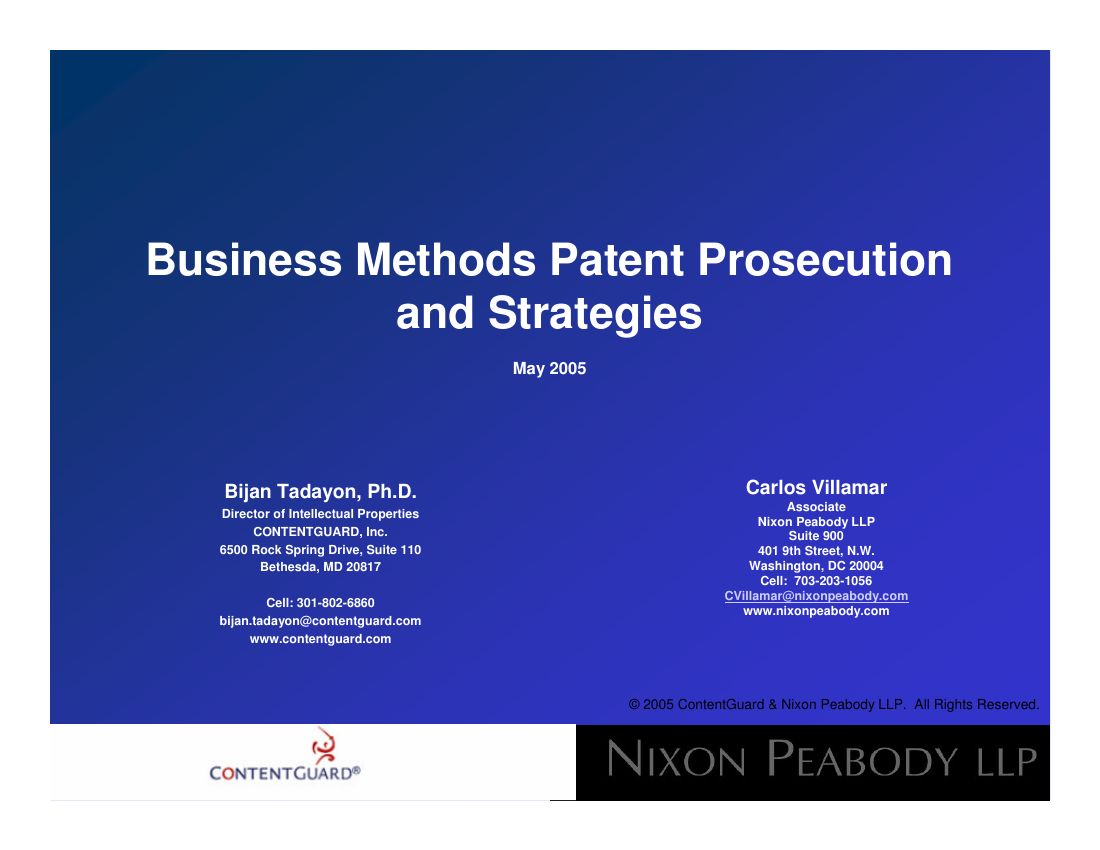
Tadayon and Villamar, "Business Methods Patent Prosecution and Strategies," Business Methods Partnership Meeting

First slide of: Tadayon and Villamar, "Business Methods Patent Prosecution and Strategies," Business Methods Partnership MeetingRead / Download →

*This article is provided by the author with the understanding that it does not constitute the rendering of legal advice or other professional advice by The Villamar Firm PLLC or its attorney.

March 1998

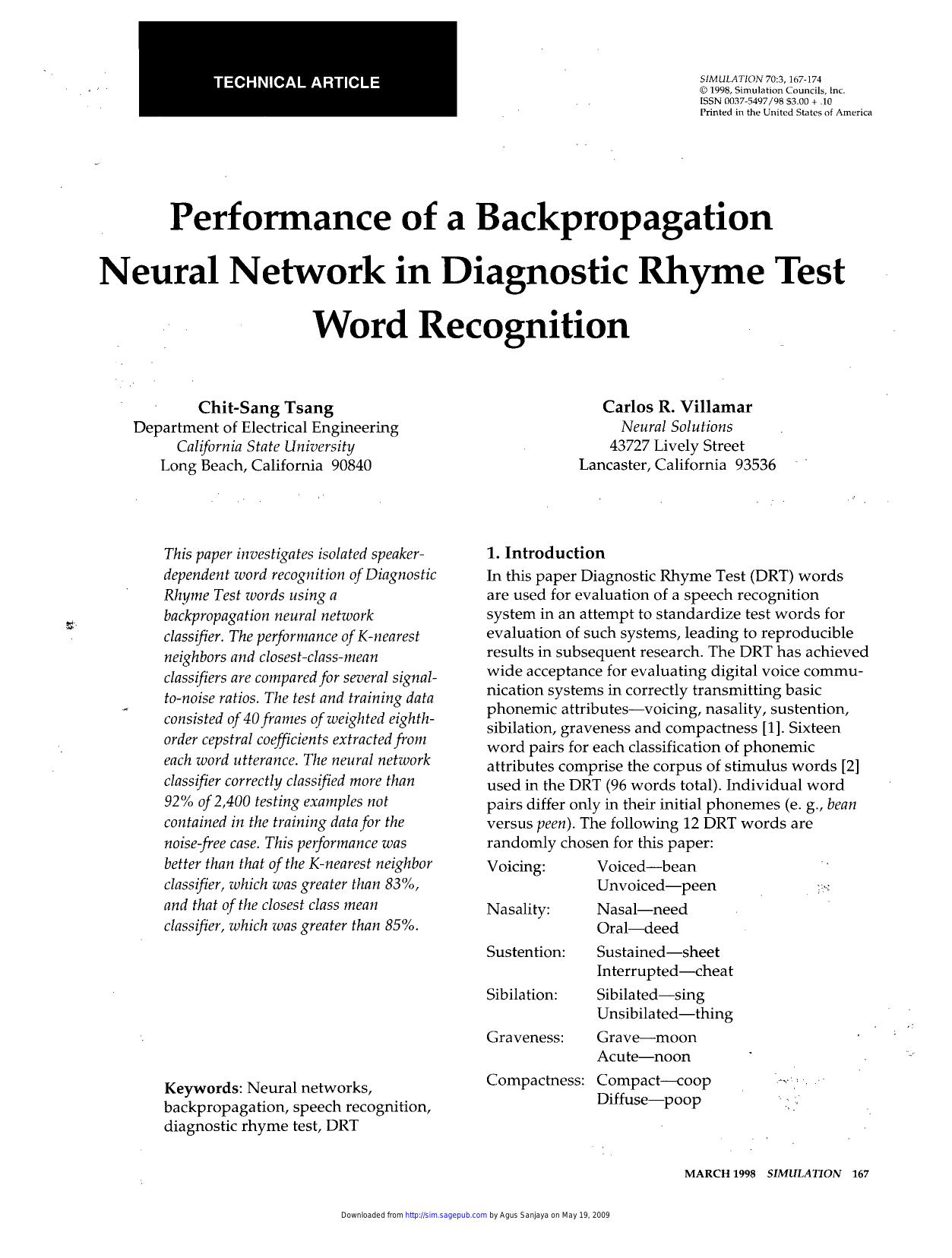
Performance of a Backpropagation Neural Network in Diagnostic Rhyme Test Word Recognition

Title page of "Performance of a Backpropagation Neural Network in Diagnostic Rhyme Test Word Recognition" published in SIMULATION journal

Co-authored with Chit-Sang Tsang and published in SIMULATION (Vol. 70, No. 3, pp. 167–177, March 1998). An early application of backpropagation neural networks — a foundational form of what is now called AI — to speech recognition using the Diagnostic Rhyme Test.

Read / Download →

*This article is provided by the author with the understanding that it does not constitute the rendering of legal advice or other professional advice by The Villamar Firm PLLC or its attorney.

Office

3424 Washington Dr
Falls Church, VA 22041

Hours

Mon–Fri · By appointment