Dec 1, 2010
Technology, Technology, Technology – The Recent Impacts of In re Bilski
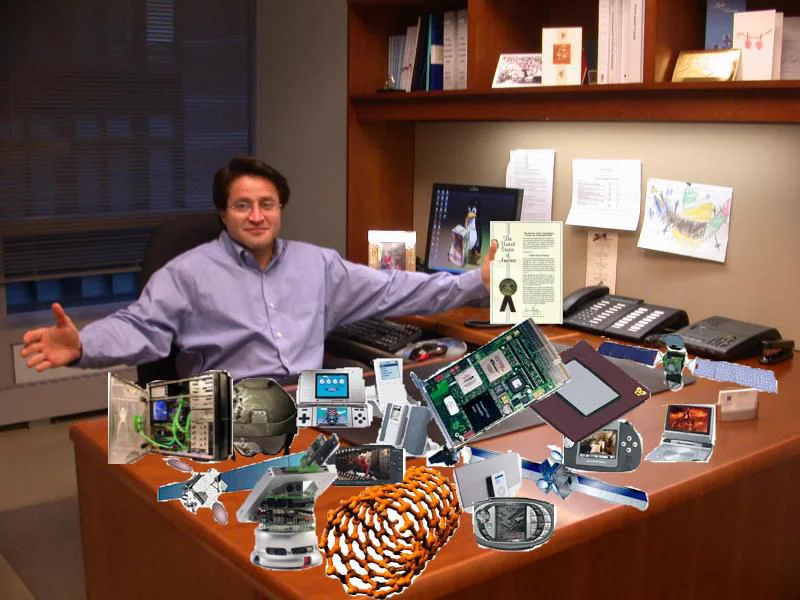
As if it weren’t already hard enough to get patents for business methods and lower tech inventions, the recent In re Bilski decisions have added another hurdle to the process. The U.S. Federal Circuit decided that a process or method invention that does not have a technological aspect cannot even be the subject of a patent application. The invention in question was directed to a process for managing the consumption of risk costs of a commodity, and did not recite any computer or technological implementations. More recently, the U.S. Supreme Court agreed and confirmed that mere abstract ideas are not patentable. The U.S. requirements are not much different than the “technical effect” requirement in most European countries for patent eligibility.
“The U.S. requirements are not much different than the “technical effect” requirement in most European countries for patent eligibility”
So what to do for inventions that are not technology based or even perhaps that are performed only with a general purpose computer? One solution might be to think about the invention in terms of broader system implementations or more specific applications. For example, an invention that requires psychologists to physically visit and observe patients for forming medical evaluations at first blush may seem to be dead in the water. However, implementing such a procedure remotely, for example, as a client-server system over the Internet and employing facial recognition algorithms, etc., to observe and evaluate the patients may employ enough technology and be sufficiently concrete to save the day. Nonetheless, in this apparently patent-hostile environment, a novelty search is well advised to increase the chances of determining if patent protection is available and to flesh out options for strengthening patentability.
“a novelty search is well advised to increase the chances of determining if patent protection is available and to flesh out options for strengthening patentability”
A recent U.S. Federal Circuit decision involving a dispute between Microsoft and Research Corporation Technologies (RCT) does provide some light at the end of the tunnel as far as patent eligibility is concerned. In this case, the U.S. Federal Circuit upheld an RCT patent directed to a method for half-toning gray scale images, finding that not all uses of computer based mathematical algorithms result in unpatentable subject matter and that the subject matter should be analyzed with respect to the patent as a whole, as compared to claim definiteness challenges which are analyzed on a claim by claim basis.
“subject matter should be analyzed with respect to the patent as a whole, as compared to claim definiteness challenges which are analyzed on a claim by claim basis”
Higher tech inventions appear to be safe for now. This is because these types of inventions typically involve technological improvements over the prior art. They are thus easier to patent and should not be affected by Bilski and other decisions. With the recent economic downturn, however, even high tech companies must be smart about how they spend their patent dollars and should work with a competent patent attorney who can understand their business and technology, who can help them navigate the IP landscape, and who can help them protect their IP assets nationally and globally.
“even high tech companies must be smart about how they spend their patent dollars”
A factor to consider in this respect is the cost-effectiveness the patent attorney provides. After all, it is no secret that the most expensive piece of the IP protection puzzle is usually the patent attorney. Therefore, it is important, particularly for high tech companies, to find a patent attorney that takes the time to understand the company’s technology, revenue model, and work processes to make sure that an IP strategy is executed in a focused and efficient manner.
“find a patent attorney who takes the time to understand the company’s technology … to ensure that an IP strategy is executed in a focused and efficient manner”
*This article is provided by the author with the understanding that it does not constitute the rendering of legal advice or other professional advice by The Villamar Firm PLLC or its attorney.